The Significance of EU Inc., the European Innovation Act and the Scaleup Europe Fund for Startups
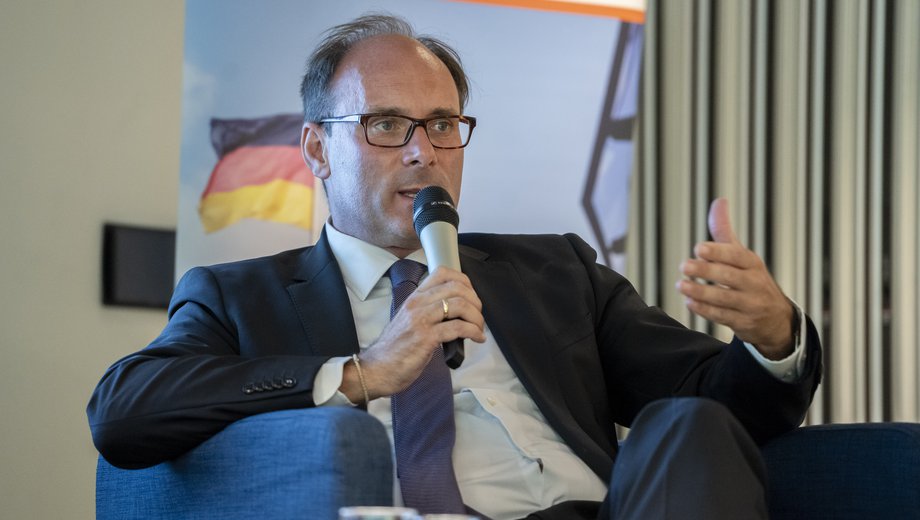
As part of the event “The Significance of EU Inc., the European Innovation Act and the Scaleup Europe Fund for Startups”, the Wirtschaftsrat welcomed Dr Andreas Schwarz, Head of Cabinet to EU Commissioner Ekaterina Zaharieva, for an exchange on the European Commission’s plans to strengthen Europe’s innovation ecosystem, improve the framework conditions for startups and scaleups, and enhance Europe’s global competitiveness. The event took place at the Bundesverband deutscher Banken in Brussels.

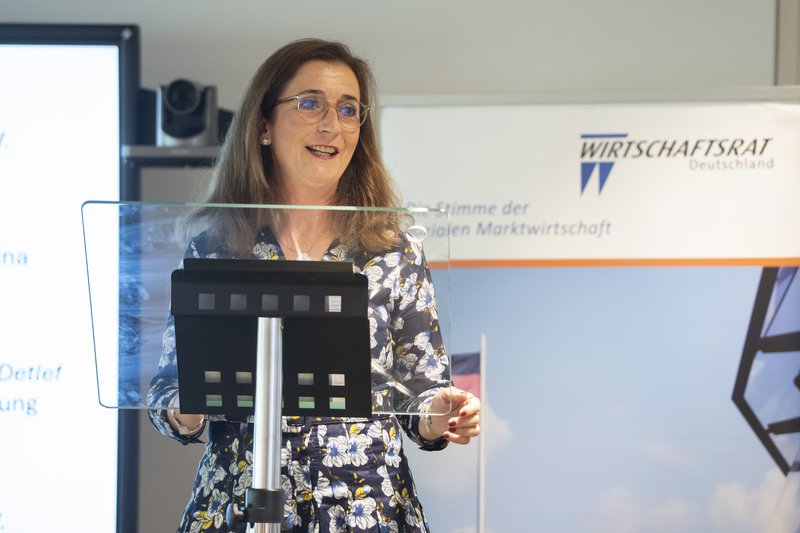
Astrid Hamker, President of the Wirtschaftsrat der CDU e.V., opened the event by underlining the strategic importance of innovation for Europe’s competitiveness, technological sovereignty and economic resilience. She stressed that startups and scaleups are key drivers of Europe’s economic transformation, but still too often face fragmented markets, complex procedures and insufficient growth financing. Against this background, she called for a genuine European innovation ecosystem, a deeper Single Market and better conditions to mobilise private capital.
In his keynote, Dr Andreas Schwarz emphasized that startups and scaleups have become a central priority of the European Commission’s innovation agenda. He described them as essential for Europe’s future industrial strength, technological sovereignty and economic success, particularly in the field of deep tech.
A particular focus was placed on the EU Inc. initiative, which Dr Schwarz presented as a potentially important structural reform. An optional, digital and cost-efficient European corporate framework could help startups avoid navigating 27 different national legal systems, reduce administrative burdens and make it easier to scale across the Single Market.Dr Schwarz stressed the importance of implementing the policy proposal with minimal amendments in order to avoid unnecessary complexity and keep the legislation as streamlined as possible.
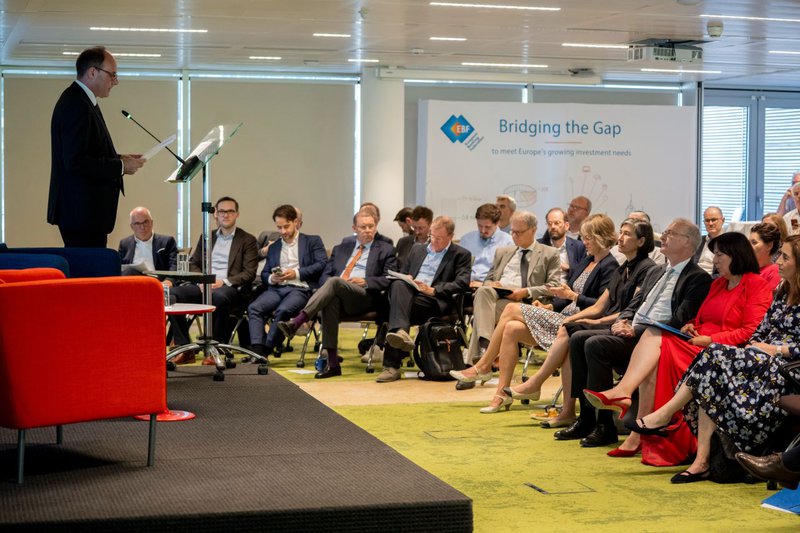
Dr Schwarz also addressed the challenge of scaleup financing. While Europe performs relatively well in early-stage financing, larger growth rounds remain difficult. The Scaleup Europe Fund was discussed as an important instrument to strengthen late-stage financing and help promising companies grow in Europe. At the same time, it was emphasized that Europe’s innovation challenge also concerns framework conditions, demand and stronger links between startups and established industry.
The subsequent discussion was moderated by Dr Detlef Fechtner, Head Reporter of the Börsen-Zeitung. In the exchange with Dr Schwarz, participants stressed the urgency of Europe’s innovation agenda. Europe has strong ideas and technologies, but too often lacks speed in implementation. The discussion therefore focused on how EU Inc. can be implemented swiftly and pragmatically, without being watered down or made more complex in the legislative process.
Another key topic was the forthcoming European Innovation Act. Dr Schwarz outlined several potential priorities, including pre-commercial procurement, the valuation of intellectual property and regulatory sandboxes for new technologies. Public procurement was highlighted as an important tool to create demand for innovative solutions, while sandboxes could help test new technologies under more flexible conditions.
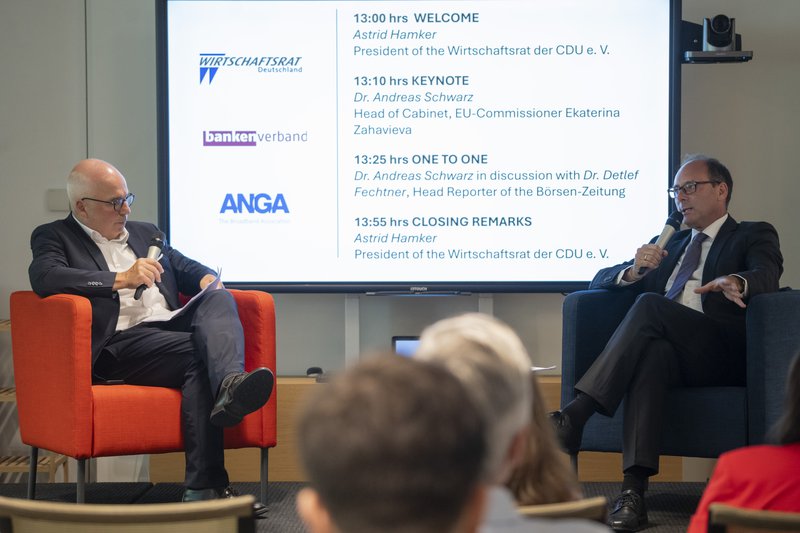
The discussion also addressed the need for closer cooperation between startups, scaleups and established industry. Innovation requires demand, industrial partners, public customers and functioning value chains — especially for deep-tech companies, which depend on reliable framework conditions and sufficient growth financing.
In the subsequent exchange with participants, topics included employee stock options, venture capital, insolvency rules, capital market financing, artificial intelligence, technological sovereignty, regulatory fragmentation and the role of the European Investment Bank. A recurring theme was that Europe must implement reforms decisively and avoid replacing existing fragmentation with new complexity.

Overall, the event made clear that Europe’s ability to innovate is now a central question of competitiveness. EU Inc., the European Innovation Act and the Scaleup Europe Fund can become important building blocks for improving growth conditions for startups and scaleups. The decisive question will be whether these initiatives can be translated quickly into effective instruments, enabling Europe to become a place where innovative companies grow into global champions.